
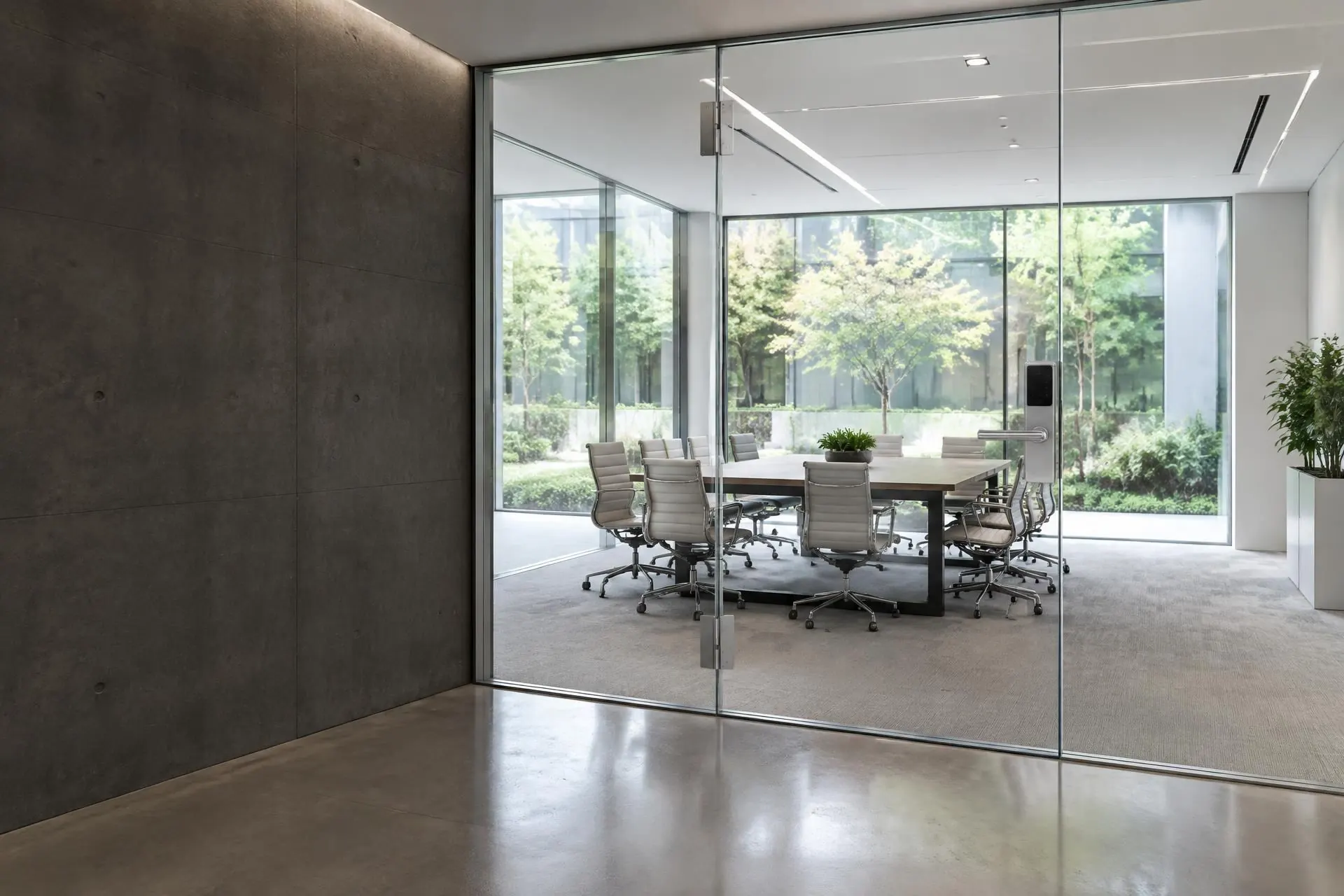
Choosing Glass for the Way You Use a Space
Windows, doors, and partitions have relied on glass for centuries because it combines transparency, durability, and visual appeal. Conventional glazing, however, offers limited control over privacy and energy efficiency. Smart glass provides an alternative that addresses these limitations. For a Dallas building project, comparing the two starts with understanding their features and deciding which best matches the space.
Understanding Switchable Glazing
A switch or smartphone app can change the transparency, color, or reflectivity of smart glass, depending on the technology used. Options include PDLC smart glass, switchable privacy glass, and electrochromic glass. The most common option, switchable privacy glass, is also called privacy smart glass. It places PDLC (Polymer Dispersed Liquid Crystal) film between two glass layers and uses electrical current to switch that film on or off.
Where Smart Glass Has an Advantage
Compared with conventional glazing, smart glass offers several benefits worth considering:
Trade-Offs to Consider with Smart Glass
There are also drawbacks to account for when selecting smart glass:
The Case for Conventional Glazing
Conventional glass remains a familiar choice for doors and windows after centuries of use, with several advantages of its own:
Matching the Material to Your Priorities
Your budget, preferred appearance, and practical needs should guide the choice. Smart glass is a good fit when privacy, energy efficiency, security, and a forward-looking aesthetic are priorities, whether for a Dallas office or a home. Traditional glass is more appropriate when the budget is limited and a simple solution matters more than advanced features.
Balancing Features Against Cost and Complexity
Neither glazing option is the best answer for every project. Smart glass brings privacy control, energy-efficiency benefits, security, and design appeal, but requires consideration of cost, maintenance, and installation complexity. Traditional glass costs less, is readily available, and is simpler to install and maintain. The trade-off is that it does not offer the advanced capabilities of smart glass. Weighing those differences against your needs is the practical starting point.