
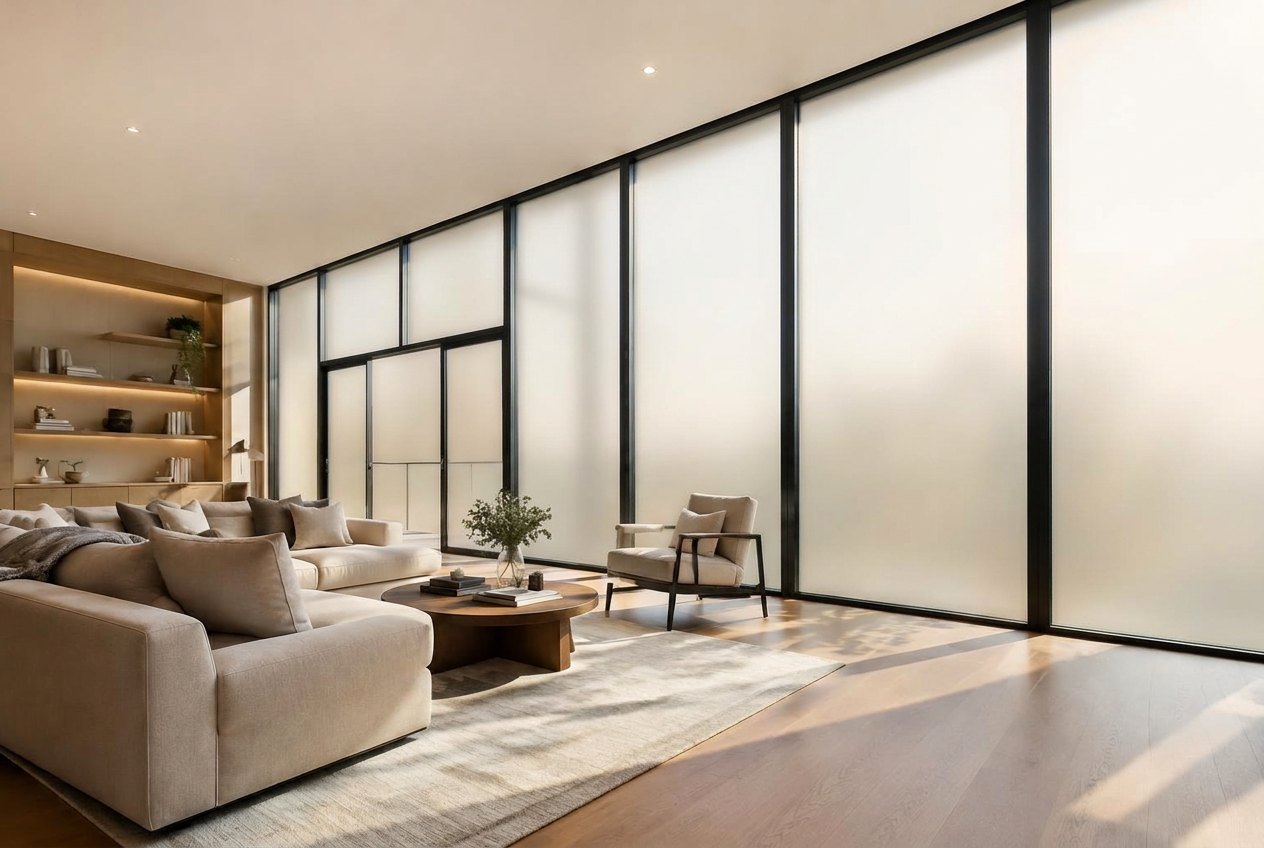
Understanding Daylight Through Smart Glass
Can a window offer privacy and still bring daylight indoors? That question often comes up when planning with switchable glass, also called PDLC (Polymer Dispersed Liquid Crystal) glass. The technology gives architects and interior designers a different way to manage visibility and natural light. Here, Smart Glass Dallas explains how light transmission works and what it means for a room.
How PDLC Controls Visibility
Polymer Dispersed Liquid Crystals are the basis of PDLC smart glass. An electrical current changes how those crystals control transparency, allowing the glazing to move between clear and opaque states. This switching capability gives users a practical way to customize visibility and privacy.
Choosing Openness or Privacy
A room does not have to remain permanently open to view or permanently screened. With smart glass, occupants can select a transparent state for visual openness and an opaque state when privacy matters. The same surface can therefore serve different needs as a space is used.
Making Use of Available Daylight
Daylight can pass through smart glass, helping interiors take advantage of natural illumination. Access to that light supports well-being and productivity and has been associated with better mood, energy levels, and satisfaction with a space. In Dallas interiors, the goal is to put available daylight to useful work.
Matching Light to Personal Preferences
Changing the transparency of smart glass gives users flexibility over the light in their surroundings. They can adjust transmission to suit their preferences rather than accepting a fixed setting. That control helps create a more comfortable atmosphere for the activity taking place.
Supporting Energy-Conscious Architecture
Using daylight effectively means less need for artificial illumination. By helping interiors make the most of natural light, smart glass can reduce lighting energy consumption. This makes it a useful fit for green architecture and design strategies focused on energy efficiency.
Where Switchable Glazing Fits
From private homes to commercial interiors, smart glass provides ways to retain daylight while controlling views. Residential applications emphasize privacy without giving up natural illumination, while commercial settings can use it to make spaces more adaptable and engaging. Offices in Uptown, hotels, and healthcare facilities are among the Dallas settings where these qualities can be useful.
What Changes Light Transmission
The amount of light passing through smart glass depends on its tint, the selected controls, and conditions outside. Understanding how those factors interact makes it easier to choose suitable light levels. As sunlight changes, users can adapt their settings to the room rather than treating illumination as constant.
Continuing Developments in Glazing
Smart glass remains an evolving field. Electrochromic glass, for instance, adds other approaches to regulating light transmission. Further technical development is expected to broaden both the available control options and the ways smart glass can be used in buildings.
Putting Light and Privacy to Work
Natural illumination and adjustable privacy can coexist with smart glass. Switching between transparent and opaque states lets occupants shape their surroundings, while thoughtful daylight use supports well-being, productivity, and lower lighting energy demand. For Dallas design projects, these qualities connect everyday usability with sustainable design. Continued advances in the technology will expand how buildings and their occupants interact with light.